On March 17, Associate Director Lin Min of the Professional Master’s Program Center led a team of faculty members together with professional master’s students from the 2024 and 2025 cohorts on a visit to the Xiaomi EV Factory for a practice-based study activity themed “Intelligent Manufacturing, Green Future.”
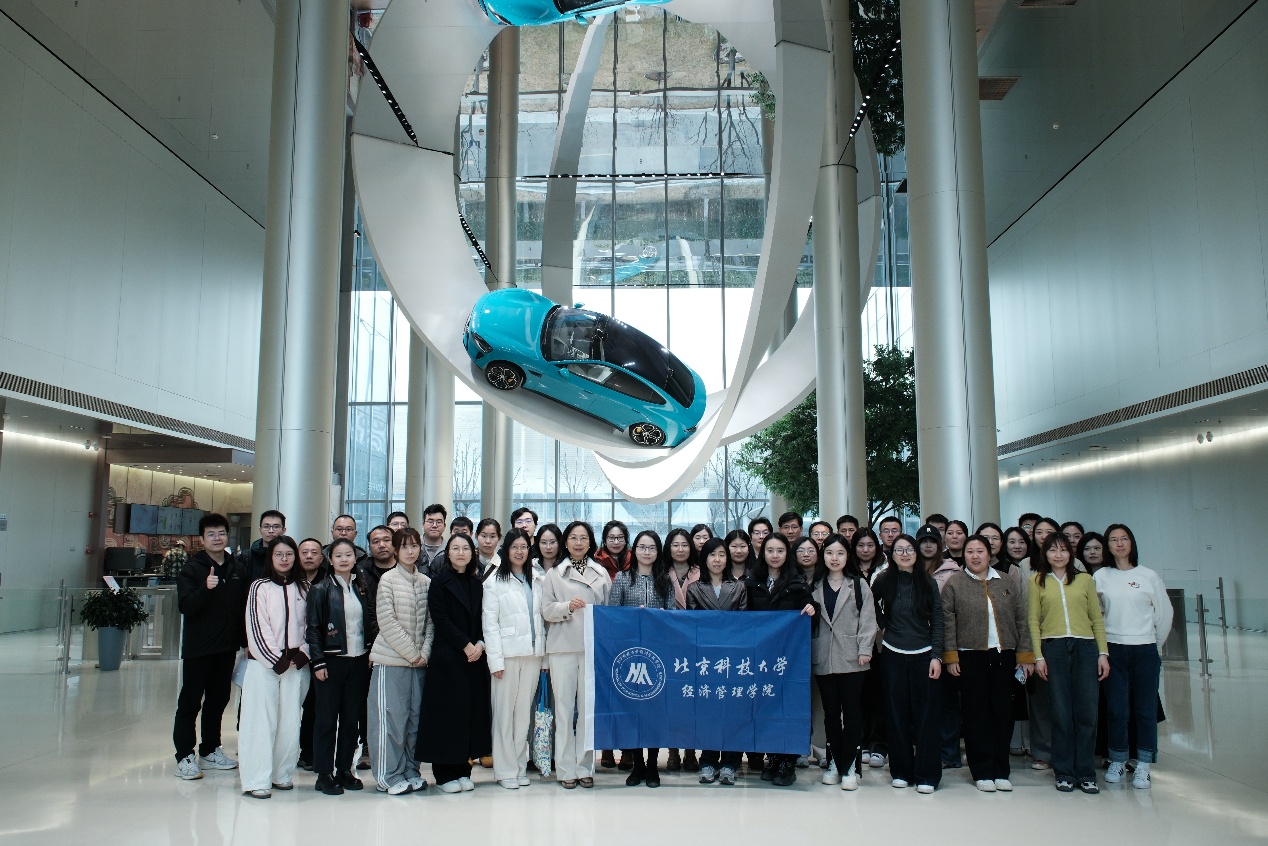
Immersive Experience: Exploring a New Vision of Smart Mobility
During the visit to the Xiaomi EV showroom, faculty members and students had the opportunity to closely observe the Xiaomi SU7 and YU7 series vehicles and experience the intelligent cockpit and smart driving systems firsthand. They actively raised questions on topics such as battery safety, algorithmic logic, and supply chain management, creating a lively atmosphere of exchange and discussion.
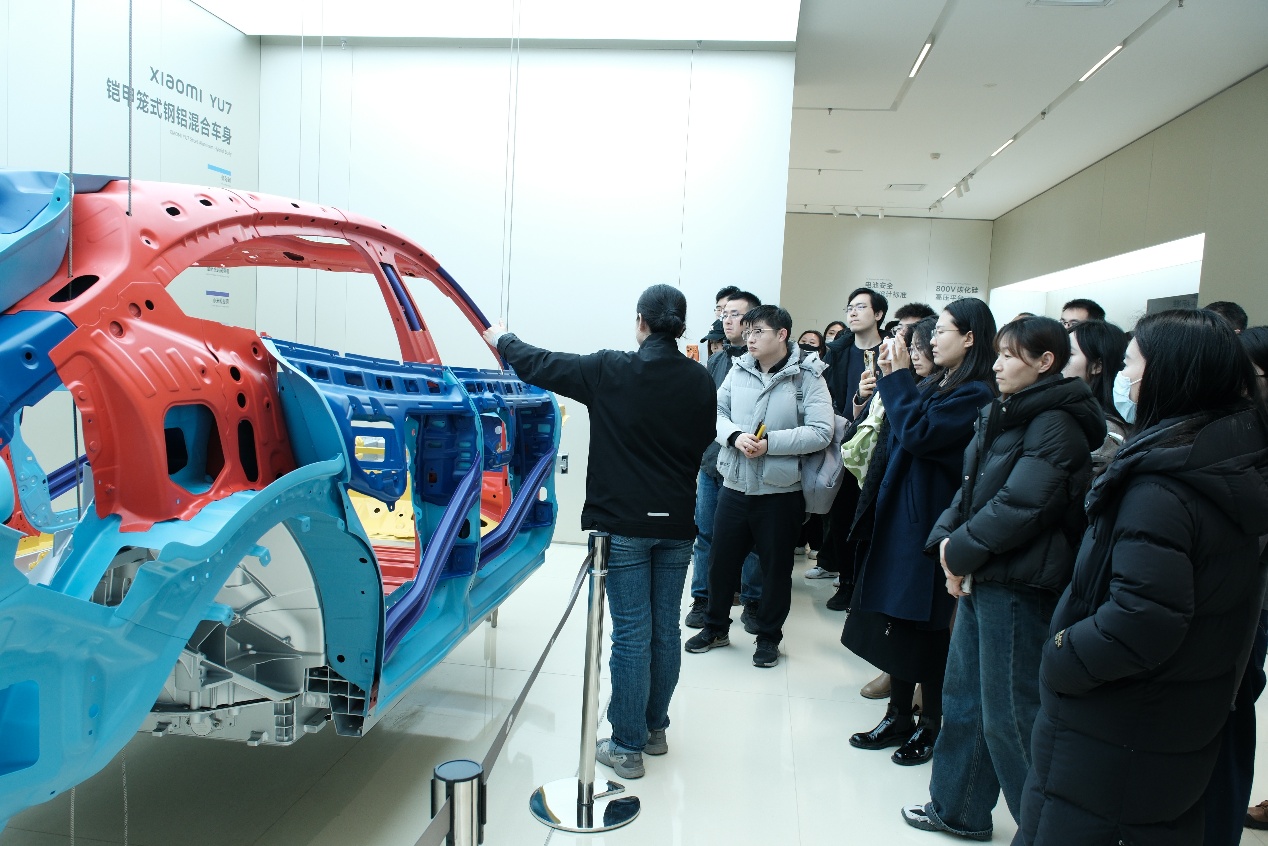
Inside the Factory: Witnessing End-to-End Intelligent Manufacturing
The delegation then toured the six core workshops of the factory, including die-casting, stamping, body assembly, painting, battery production, and final assembly, gaining firsthand insight into the full intelligent manufacturing process of complete vehicle production.
The factory operates with a highly automated production system that enables exceptional efficiency. Its large die-casting equipment cluster runs with 100 percent automation; the stamping workshop can complete one workpiece in as little as four seconds; the body shop achieves an assembly precision of ±0.5 mm; the painting workshop can complete a color change in just 40 minutes; the battery workshop realizes 100 percent online inspection; and the final assembly line rolls out a new vehicle every 76 seconds on average. Across the factory, more than 700 intelligent robots are deployed, working together with Xiaomi’s self-developed AI vision system for real-time quality inspection, with an accuracy rate exceeding 99.9 percent. These capabilities fully demonstrate the factory’s strong technological strength and benchmark status in the field of intelligent manufacturing.
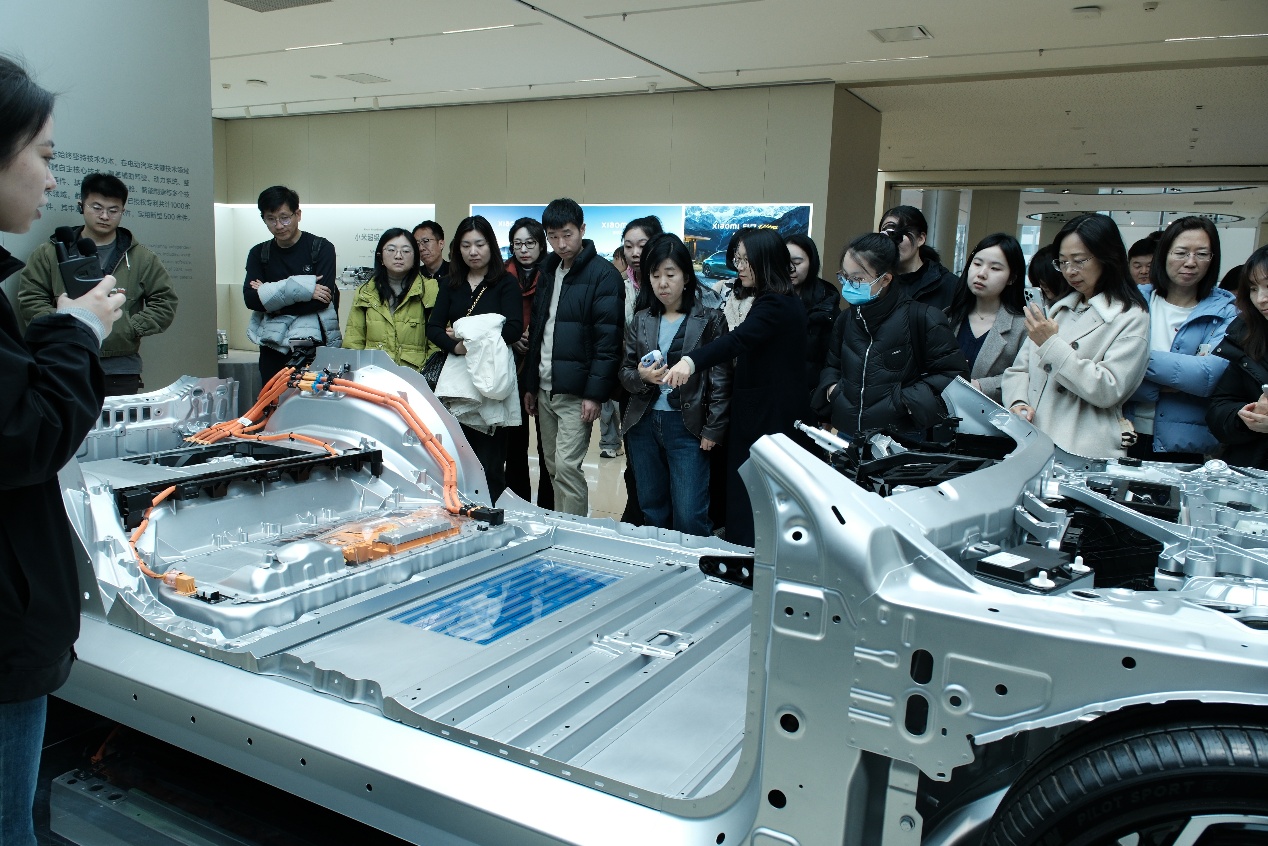
Green Manufacturing: Advancing Low-Carbon Development
While promoting intelligent manufacturing, the factory also actively practices green and low-carbon development principles. Its rooftop photovoltaic system generates 16.4 million kWh of electricity annually; the large die-casting process uses 30 percent recycled aluminum; and the painting workshop achieves an exhaust gas treatment efficiency of 99 percent. Together, these measures demonstrate the organic integration of efficient manufacturing and environmental sustainability.
Reflection and Exchange: Building New Consensus on Industry–Academia Collaboration
At the conclusion of the visit, Lin Min organized an on-site discussion and noted that the activity provided students with a valuable opportunity to learn directly from an industrial setting. She emphasized that such visits help bridge classroom theory and enterprise practice, laying a solid foundation for future collaborative innovation among industry, academia, and research.
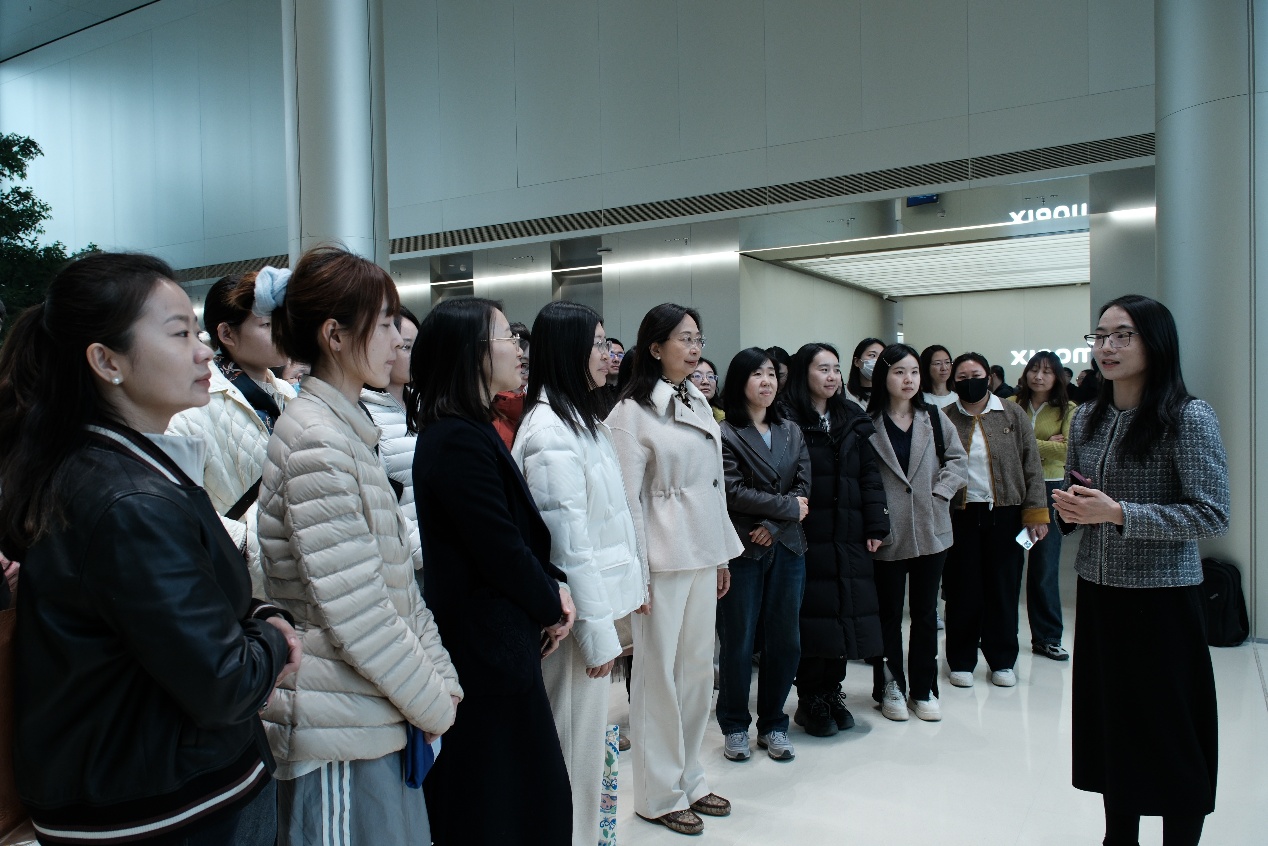
China’s new energy vehicle industry is currently at a critical stage of transition from quantitative expansion to qualitative upgrading. This visit to the Xiaomi EV Factory was not only a vivid example of practice-oriented teaching, but also an important platform for gaining insight into frontier technologies. Looking ahead, the School will continue to strengthen industry–academia–research collaboration platforms and cultivate innovative talent to support high-quality industrial development.
Contributed by: Professional Master’s Program Center
Edited by: Chen Huanli
Reviewed by: Huang Xiaoxia